欺诈猎人
对话普华永道林骏达:未来3至4年单一人形机器人形态无法适配全场景作业需求,2030年三类机器人形态将稳定共存_我的网站

A |
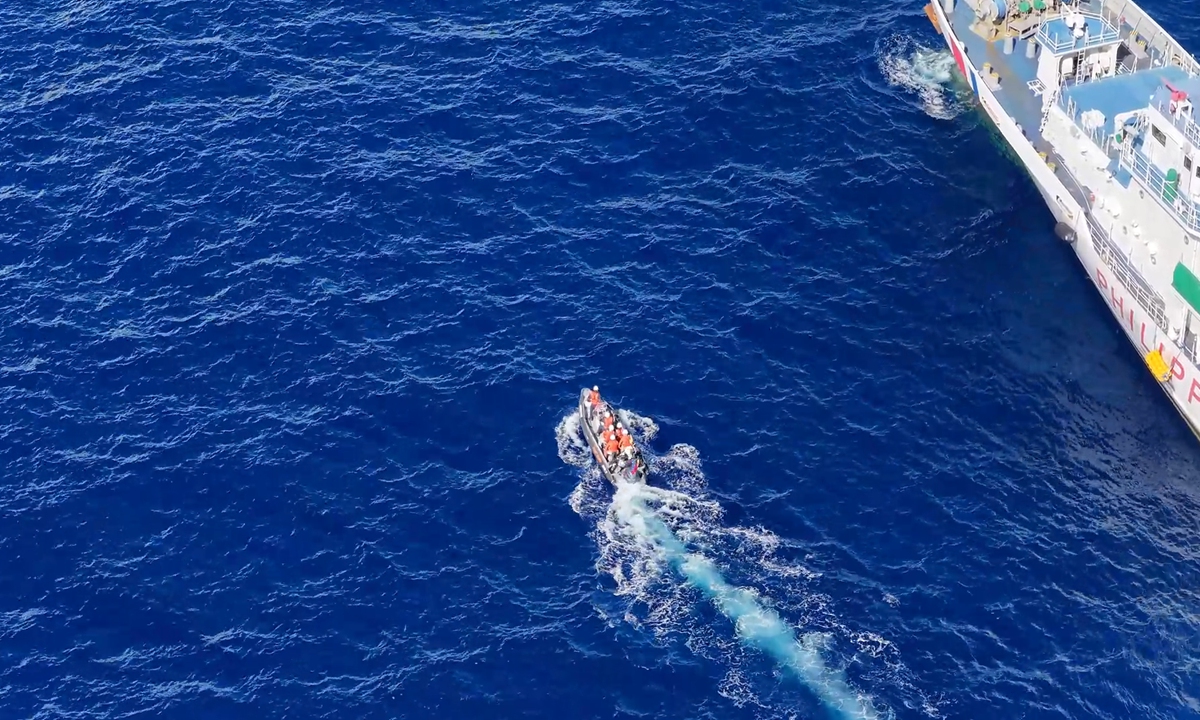
Chinese experts warned on Wednesday that Manila should not mistake humanitarian accommodation for a concession and must bear the consequences if it scraps the arrangement.
Yang Xiao, a research fellow at the Institute of Peaceful Development under the Chinese Academy of Social Sciences, told the Global Times on Wednesday that the Philippine side's claims are fundamentally flawed from legal, historical and practical perspectives.
Ren'ai Jiao is an inherent part of China's Nansha Qundao, over which China has indisputable and complete sovereignty, Yang said, adding that it is legally untenable for the Philippines to claim that Ren'ai Jiao is part of its exclusive economic zone.
"The Philippines deliberately grounded the abandoned warship at Ren'ai Jiao in 1999 and repeatedly pledged to remove it and restore the reef, but has failed to honor those commitments for more than two decades. This itself constitutes a continuing violation of China's territorial sovereignty," Yang said.
This is not the first time the Philippines has denied seeking China's approval for resupply missions to Ren'ai Jiao. In April 2025, Chinese Foreign Ministry spokesperson Guo Jiakun responded to similar claims, saying that China's position on how to handle the current situation at Ren'ai Jiao is clear and consistent.
"First, by keeping its warship grounded at Ren'ai Jiao for decades running, the Philippines has been violating China's sovereignty and the Declaration on the Conduct of Parties in the South China Sea (DOC). We demand that the Philippines tow away the warship. Second, between now and when the warship is towed away, should the Philippines need to send living necessities, China is willing to allow it in a humanitarian spirit if the Philippines informs China in advance and after on-site verification is conducted. Third, if the Philippines were to send large amount of construction materials to the warship and attempt to build fixed facilities or permanent outpost, China will absolutely not accept it and will resolutely stop it in accordance with the law and regulations," said the spokesperson.
"This means that the Philippines' so-called '15 safe and incident-free resupply missions' were all made possible by China's humanitarian accommodation and strict oversight," Yang stressed. Each mission was reported in advance and allowed to proceed only after inspections confirmed no prohibited construction materials were aboard. The CCG intercepted any such materials through lawful measures, Yang said.
The Philippines' unilateral denial of its notification and inspection obligations while enjoying the arrangement's benefits amounts to a blatant breach of its commitments, the expert noted.
Yang also noted that Manila's narrative contains an obvious logical contradiction. If Philippine resupply missions were truly unimpeded, there would be no need for Manila to repeatedly claim that China had "blocked" its missions and call for international intervention. Yet if China had continuously "obstructed" the missions, the Philippines could not have completed 15 safe and incident-free resupply operations.
"Manila has simply manipulated its narrative to suit its publicity needs, portraying itself as a 'victim' when seeking international attention while touting smooth resupply operations and its own strength when seeking to project toughness. Its hype over the 15 resupply missions is essentially aimed at rallying domestic support and stoking confrontation internationally to conceal the reality that its illegal presence is tightly constrained," Yang said.
China's handling of the Ren'ai Jiao situation, meanwhile, has consistently reflected restraint and humanitarian considerations. According to a statement by the China Coast Guard (CCG) spokesperson on the transfer of injured personnel by the Philippine side, Jiang Lue, a CCG spokesperson, said that on the morning of July 21, out of humanitarian considerations, China allowed the Philippines to transfer injured personnel by small boats from the BRP Sierra Madre (LT-57), which has been illegally grounded at Ren'ai Jiao, to Philippine Coast Guard vessel 9702. The CCG questioned and verified the Philippine vessels and monitored the entire process.
The CCG will continue to carry out rights-protection and law enforcement operations in accordance with the law in the waters around Ren'ai Jiao to safeguard China's territorial sovereignty and maritime rights and interests, Jiang said.
Yang said, stressing that Manila's tough talk and one-sided claims cannot make up for its legal and moral shortcomings.
"Any attempt to permanently occupy Chinese islands and reefs, unilaterally tear up the understanding and continuously challenge China's territorial sovereignty runs counter to international law and the broader trend toward peace and development in the region and is ultimately doomed to fail," Yang added.
。 每经记者:张梓桐 每经编辑:魏文艺 7月22日,普华永道中国发布《2026年智能机器人产业发展白皮书》。

B | 白皮书指出,中国智能机器人产业已从试点验证迈入规模化落地关键期,预计到2030年将呈现“形态多元化、场景精准化、技术协同化”的发展格局。 但热潮之下,一连串行业争议悬而未决:大厂携资金、算力优势大举入场,创业公司还有多少生存空间?资本疯狂追捧具身智能大模型,商业化落地困局能否被算法破解?押注通用人形机器人,还是深耕垂直场景,哪条路线能够跑通?白皮书发布后,普华永道思略特中国科技、媒体及通信行业合伙人林骏达在接受《每日经济新闻》记者采访时,深度拆解了行业当下的机遇与隐忧。 林骏达 图片来源:受访者提供 大厂与创业公司分层竞争:赛道无零和博弈,各司其职形成互补 当前,具身智能赛道企业阵营清晰割裂,外界普遍存在一种争论:手握算力、资金、供应链优势的大厂,是否会挤压创业公司的生存空间? 在林骏达看来,当前具身智能赛道并非单一的竞争格局,市场参与者可清晰划分为两大阵营、四类主体,不同玩家基因迥异、壁垒分明,现阶段并非零和博弈,而是各司其职、互补发展。

C | 入局赛道的大厂主要分为两类。

D | 一类是以阿里、京东、腾讯为代表的互联网大厂,其核心优势集中在算力储备、大模型算法、数据积累与现金流资源上,长期的互联网技术积淀让其在通用智能算法、模型迭代创新层面具备天然优势,擅长布局泛化性强、适配多场景的通用技术体系。 另一类是以手机、车企为核心的千亿元级硬件厂商,这类企业深耕硬件制造多年,核心壁垒体现在产品定义能力与成熟的供应链体系中,依托长三角、珠三角完善的制造业产业链,能够快速实现机器人本体的量产落地,完美适配具身智能“软硬件一体化”的硬件基底需求。 整体而言,大厂凭借资金、人才、供应链的全方位优势,主攻通用模型、泛化场景与大规模量产产品,聚焦人形机器人等出货量潜力巨大的赛道。

E | 与大厂对应的创业公司同样分为两类,形成了差异化的赛道布局。

F | 第一类是高校、实验室、海外科技人才孵化的技术型创业团队,这类企业学术底蕴深厚,核心团队多以博士群体为主,底层模型架构、前沿技术探索能力突出,和早期商汤科技的学术研发底色高度相似。 凭借顶尖的人才团队,这类企业专注世界模型等前沿技术迭代,主攻具身智能底层技术突破,也是资本市场重点押注的“技术颠覆者”。

G | 第二类是深耕垂直场景的产业型创业公司,以普渡机器人等企业为代表。这类企业深耕仓储、送餐、防爆、巡检等细分场景十余年,深度吃透行业客户需求、场景数据与垂直供应链,早已完成场景适配与技术打磨。 不同于前沿技术团队,这类企业不追逐通用技术热点,而是持续筑牢垂类场景壁垒,目前头部企业已实现数亿元至数十亿元营收,完成初步商业化验证。

H | 一直以来,市场存在路线之争:押注通用大模型,还是深耕垂直场景? “当下行业仍处于百花齐放的培育阶段,各类玩家赛道错位、相互赋能。”林骏达表示,五年前具身智能行业门槛高、回报慢,难以吸引顶尖人才,而如今资本入场带动人才大规模涌入,为行业发展奠定了基础。随着本体、大脑、小脑技术不断融合,各类玩家赛道边界逐渐交融,但分层竞争、互补发展的核心格局不会改变。 白皮书认为,人形机器人的核心价值在于天然适配人类创造的物理世界,而非对其他形态的全面替代。未来3至4年,单一的人形机器人形态无法适配全场景作业需求,过度押注可能带来产业资源错配与非理性发展。到2030年,工业机械臂、轮/四足机器人、人形机器人等三类机器人将形成清晰分工、长期共存的稳定格局。 资本高热暗藏泡沫:技术出圈容易,产业化落地道阻且长 2026年上半年,具身智能赛道分化态势愈发极端。

I | 资本市场疯狂追捧主打具身智能大脑、大模型算法的创业公司,相关标的接连拿下大额融资,估值快速膨胀;而另一边,能够稳定产生营收的垂类机器人企业获得的关注度却相对有限。 在林骏达看来,资本扎堆布局具身智能大脑赛道,核心是复刻了早期大语言模型的投资逻辑——顶级人才团队具备技术颠覆潜力,前沿模型技术一旦实现突破,便能重塑行业格局,参考OpenAI、Anthropic的成长路径,资本市场愿意为顶尖技术团队的长期价值买单。 但在具身智能赛道高热之下,林骏达对行业泡沫保持清醒的谨慎。 他指出,具身智能是典型的“知行合一、软硬件一体化”赛道,绝非单纯的模型算法比拼,无法脱离硬件本体独立发展。机器人的环境感知、动作捕捉、运动控制、实时纠错等核心能力,都需要依托硬件传感、物理控制体系实现,单纯的软件模型优势无法弥补硬件工程化、场景适配的短板,这也是诸多实验室顶尖技术难以落地的核心原因。 更为关键的是,当前多数热门的模型类创业公司仍停留在实验室验证阶段,尚未触及产业化核心难题。“技术出圈容易,产业化落地很难。

J | ” 林骏达强调,具身智能产业化需要经历技术产品化、产品商品化、商品产业化三大阶段,目前绝大多数前沿模型企业仅完成技术探索,尚未落地标准化产品,距离规模化商业化、产业化还有漫长距离。 反观行业内的垂类场景企业,已经率先完成商业化闭环。

K | 送餐、化工防爆、矿山巡检等半封闭场景,凭借刚需属性、可量化的降本增效价值,已经实现万台级出货、数亿元级营收,部分企业现金流持续优化,成功跑通商业模式。这类场景不仅能够持续放大供应链规模、降低硬件成本,积累的真实场景数据还能反哺前沿模型迭代,成为行业稳健发展的“压舱石”。 对于行业未来走势,林骏达总结了“两条腿走路”的健康发展格局:一方面,垂类务实场景持续放量,未来三年各细分赛道头部企业将彻底定型,完成从商业化到产业化的跨越;另一方面,国内依托人才、政策、资本红利,在前沿具身智能大模型领域持续对标美国头部企业,实现技术赶超。

L | 在资本热度维度,林骏达认为,行业热度将由三大因素决定:一是硅谷前沿技术的迭代风向标,二是国内产业政策与刚需场景的牵引力度,三是企业商业化闭环与现金流改善速度。短期资本热度仍将维持高位,但中长期会向真正具备落地能力、盈利潜力的企业集中,行业将逐步告别泡沫化炒作,进入务实落地的高质量发展阶段。 针对行业资本化路径,林骏达表示,赛道企业已形成清晰的分层上市格局。营收稳定、现金流向好的垂类场景龙头,适配科创板等A股资本市场,依托产业资源持续巩固行业话语权;深耕前沿技术、具备核心技术壁垒但尚未实现大规模营收的创新企业,更适合港股18C等包容性板块,依托耐心资本持续深耕技术研发。 资本市场正在等待一个标杆样本。在林骏达看来,宇树科技近期顺利过会已成为行业标志性事件,打破了市场对机器人赛道“难以资本化”的固有认知,极大提振了行业信心,将推动更多优质具身智能企业对接资本市场,加速行业优胜劣汰。 免责声明:本文内容与数据仅供参考,不构成投资建议,使用前请核实。据此操作,风险自担。 每日经济新闻。
Current article:http://aa2h.liangkuataosanxuanmiancen.sbs/v02x90/ex9b.html
Published on:21:57:16


